Showing posts with label EMA. Show all posts

Wednesday, 11 December 2019

Official Handover of Enforcement Officer Resources

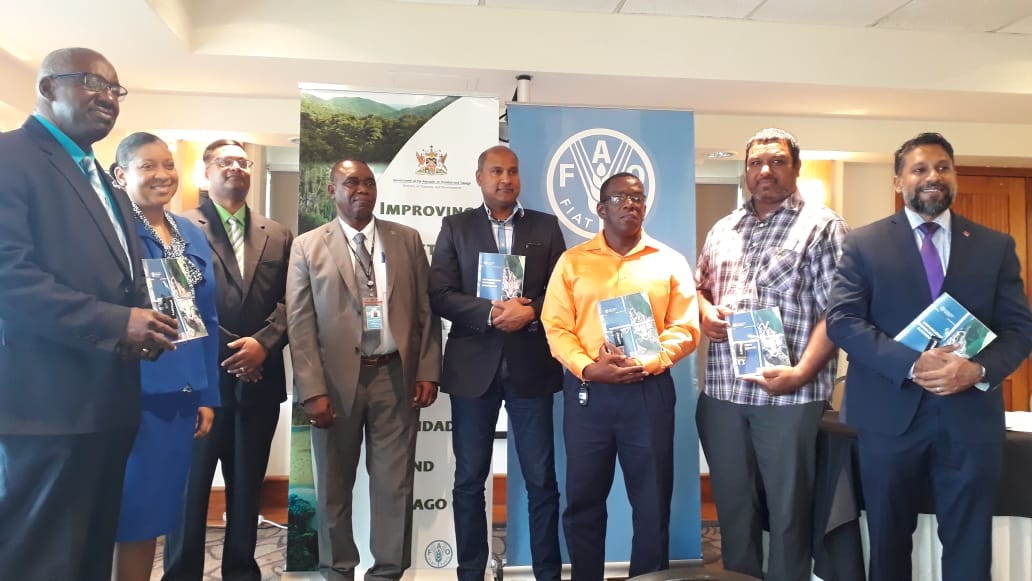
On Wednesday December 11th, 2019 the Food and Agriculture Organisation Food of the United Nations (FAO/UN) held the official handover of Enforcement Officer Resources stemming from the Improving Forests and Protected Areas Management (IFPAM) Project. 

The handover represents the results of the ongoing efforts of the IFPAM project, in particular three (3) workshops held under the auspices of the Environmental Management Authority (EMA) in collaboration with the FAO/UN between June and August of 2018 at Port-of-Spain, San Fernando and Tobago.  The theme of those workshops was “Boosting our frontline: Improving enforcement of laws for environmental management.”

The objectives of the workshops, were to:
    • Improve knowledge of the impacts of deleterious actions on the health of ecosystems and livelihoods
    • Build and strengthen networks to enable improved collaboration among governmental organisations.
    • Improve knowledge of the Environmental Management Act 2000 Ch. 35:05 and rules; the Forest Act Ch. 66:01; the Conservation of Wildlife Act Ch. 67:01 and other relevant laws, in particular the State Lands Act Ch.57:01 and The Town and Country Planning Act Ch.35:01.
As part of this initiative, three (3) tangible outputs were created;  
  1. An enforcement officer’s guidebook, which lists some of the most applicable legislation, additionally, the guide explains at a basic level the methodology for coordinating among the various enforcement agencies and the fundamentals for laying charges under current legislation.
  2. Standard Operating Procedures have been developed which include photographs of all the species to afford easy identification as well as a list of contacts of the relevant regulatory authorities.
  3. Along with a wallet sized, weatherproofed guide which outlines the ten basic steps for carrying out an investigation. 

Deputy Permanent Secretary of the Ministry of Planning and Development, Ms. Melanie Noel addressing the audience

Mr. Steve Lalbeharry, Regional Coordinator, Emergency Response & Investigations, EMA Describing the Enforcement Materials

Representatives of Different Agencies with Copies of their Enforcement Materials


Monday, 26 August 2019

Meetings of the Basel, Rotterdam and Stockholm Conventions, Conferences of the Parties, 2019


The protection of human health and the environment, through the environmentally sound management (ESM) of hazardous materials is the common objective of the Basel, Rotterdam and Stockholm Conventions, commonly known as the BRS Conventions. The 2019 Meetings of the COPs to the BRS Conventions were held in Geneva, Switzerland from April 29th - May 10th, 2019. Trinidad and Tobago participated as a Party to these three (3) multilateral environmental agreements (MEAs) in the chemicals and waste cluster and was represented by Ms. Keima Gardiner, Waste Management Specialist, Environmental Policy and Planning Division (EPPD), Ministry of Planning and Development; Head of Delegation, Mr Hasmath Ali, Ministry of Health; and Mr. Wayne Rajkumar, of the Environmental Management Authority (EMA).

Approximately 1,400 delegates from 180 countries spent two (2) tedious weeks negotiating towards the adoption of several decisions. These decisions included the topical issue of plastic pollution as exhibited through the landmark decision to increase the cross-border control of low-quality plastic waste, and the establishment of a global Partnership on Plastic Waste under the Basel Convention, the global treaty that deals with the transboundary movement of hazardous wastes and their disposal. Locally, this decision would be effected through the EMA, the National Competent Authority under the Basel Convention.

There was also the listing of two (2) new toxic persistent organic pollutants (POPs) under Annex A of the Stockholm Convention: Dicofol, a pesticide (production of which is primarily in India and is expected to cease soon) and perflorooctanoic acid (PFOA), its salts and related compounds. PFOA is used for non-stick kitchenware, surface treatments in textiles, paper and paints and in fire-fighting foams. Annex A listing means that all Parties are to take all measures to eliminate the production and use of these POPs. Once endorsed, Trinidad and Tobago's National Implementation Plan on POPs will work towards achieving this.

Under the Rotterdam Convention, there was the historic adoption of a Compliance Mechanism, 15 years after the Convention's entry into force, via a majority vote of 120-6. Trinidad and Tobago was one (1) of twenty (20) countries in the ‘Friends of the President’ group established to initially resolve this issue by consensus. There was also the listing of two (2) new chemicals: phorate, a toxic pesticide and the industrial chemical hexabromocyclododecane (HBCD), which means these would now be subject to the prior informed consent (PIC) procedure to promote information exchange between countries engaged in its trade. Locally, the Pesticides and Toxic Chemicals Inspectorate and the Environmental Policy and Planning Division would be responsible for this process.

On the invitation of the BCRC Caribbean, Ms. Keima Gardiner presented on behalf of the Caribbean SIDS at a side event on ‘Bringing the Benefits of BRS Conventions to SIDS’. The delegation also took the opportunity to pay a visit to Her Excellency, Permanent Representative, Ambassador Makeda Antoine-Cambridge at the Permanent Mission of Trinidad and Tobago to the United Nations, Geneva.

T&T Representative (L-R) - Mr. Wayne Rajkumar, Ms. Keima Gardiner and Mr. Hasmath Ali
Ms. Keima Gardiner (front, centre) representing T&T in the 'Friends of the President Group'
Ms. Keima Gardiner presenting on 'Bringing the Benefits of BRS Conventions to SIDS'


Saturday, 5 May 2018

Easter Weekend Outreach Builds Awareness


Over this year's Easter weekend, teams engaged in fire patrols from the Forestry Division and local community-based organizations took the opportunity to meet with persons who were visiting the coastal region and Jagruma River for rest and relaxation.  The teams shared information on the value of the Swamp and partnered with the ICare programme to distribute garbage bags for proper collection and disposal of plastics.  

This activity was an public outreach activity developed under the Improving Forest and Protected Area Management project by the Nariva Swamp Subcommittee.

Read brief reports on the activity from the Forestry Division and Biche Environmental Action Group.

Friday, 10 March 2017

Public Consultations for the revised Draft National Environmental Policy


Public Consultations for the revised Draft National Environmental Policy have begun.     The document draft can be accessed at the following link:

http://www.ema.co.tt/new/images/public_comments/NEP_Draft.pdfhttp://www.ema.co.tt/new/images/public_comments/NEP_Draft.pdf


Please consult the schedule below to find a session near you.


Monday, 8 August 2016

Week Three at P3DM – Populating and Polishing


Week 3 at the P3DM exercise at Cumana Village focused on gathering information from stakeholders (“populating” the model) and later, painting of the model (“polishing”) to reflect the various assets and threats at the site.  
The first activity featured lively interaction with representatives of Government agencies and local
non-governmental groups including community groups and religious groups. 
The staff of the Project Coordination Unit of the “Improving Forest and Protected Areas in Trinidad and Tobago” participated in both activities and provided a brief report. 


Monday, 18 July 2016

Week Two at P3DM – Cumana Village, Trinidad

Week two of the Participatory 3-Dimensional Model (P3DM) building exercise at the Cumana Agro-Tourism Centre featured the ‘smoothing’ process, painting of the model and information “population” occurred during the period Monday July 11 - Saturday July 16, 2016.  The co-ordinating team of the Environmental management Authority (EMA) was once again joined by the mixed group of facilitators, including members of the “Improving Forest and Protected Areas Management in Trinidad and Tobago”  Project Coordination Unit of the Food and Agriculture Organization (UN-FAO).


Click here to access the full report.


Wednesday, 13 July 2016

New P3DM begins in Cumana

All were hands on deck for the development of a participatory 3-Dimensional model (P3DM) of the Matura National Park Environmentally Sensitive Area (ESA). This was led by the Environmental Management Authority (EMA), this project got underway at The AgroTourism Centre, Cumana Village, Toco in early July.   

Students begin tracing contours under guidance of the EMA officers


Students enjoying the model-building
The activity is in support of the Authority’s Education and Outreach Programme in the ESA, and is the third component of a project geared towards promoting the use of public participation in the management of sensitive areas, building public knowledge and understanding of the value of the ESA, documenting existing threats to the site and to gather information that will advise on the best way forward on addressing environmental concerns and inform a communication strategy for the ESA.

The model layers are kept in position by glue and metal poles and are reinforced by nails during construction


River valleys and coastal zone areas appear on the model
Additionally, the modelling also fits well into the into the current national project, Improving Forest and Protected Area Management in Trinidad and Tobago currently being coordinated by the Food and Agriculture Organization (UN-FAO) on behalf of the Government of Trinidad and Tobago. The Project Coordination Unit of the FAO therefore provided support to the project in assisting with the training of facilitators for the activity and actual facilitation throughout the model-building process.

Click here to read the full report. 

Tuesday, 17 November 2015

EMA Research Symposium on Managing Protected Areas and Species


On November 16th, 2015 the Environmental Management Authority (EMA) hosted a Research Symposium on Environmentally Sensitive Species (ESSs) and Environmentally Sensitive Areas (ESAs) entitled, “Managing Our Protected Areas and Species: Linking Science to Policy and Decision-making” at the Trinidad Hilton and Conference Centre.


Delivering the feature address on behalf of the Honourable Minister of Planning and Development was Dr. David Persaud, Environmental Manager of the Environmental Policy and Planning Division (EPPD) of the Ministry. Dr. Persaud emphasised that the protection of the environment is an integral aspect of Government’s new national development pathway for Trinidad and Tobago in keeping with, the UN Sustainable Development Goals (SDGs). Of particular relevance is SDG #15 which highlights the need to protect, restore and promote sustainable use of terrestrial ecosystems, sustainably manage forests, combat desertification and halt and reverse land degradation and biodiversity loss. 


Dr. Persaud delivering the feature address on behalf of the Honourable Minister of Planning and Development at the start of the Symposium.


He emphasised the need for timely and efficient statistical data (such as those presented during the Symposium) as being a key deliverable to inform the decision making processes and innovative approaches in the management and conservation of ecological resources. This will involve engaging all stakeholders and working together towards finding solutions to protect sensitive areas and species. 


Participants had the opportunity to learn about the latest research local scientists are engaged in with respect to protected areas and species in Trinidad and Tobago; whilst also improving their understanding of the major challenges and possible solutions for management of ESAs and ESSs. They also discussed the linkage between science, policy and decision-making. Expert panels led by renowned local scientists such as Professor Agard of UWI and Dr. Carol James, as well as Ms. Neila Bobb-Prescott from the Food and Agriculture Organization of the United Nations (FAO), stimulated the discussion in an attempt to flesh out the symposium objectives.


 Ms. Candace Amoroso, Biodiversity Specialist of the Multilateral Environmental Agreements Unit, was the EPPD’s representative on Panel 3, where she discussed Linking Science to Policy and Decision-Making , the Major Challenges and Possible Solutions.   She emphasised that the scientific community can be most effective at shaping policy with focused, realistic, science-based recommendations that are targeted to and using the language that policy-makers understand as well as presenting research that reflects a broad level of input from stakeholders. In addition, she suggested that communication and access to data can be enhanced between the groups of stakeholders with the use of science-led expert groups and web forums to provide advice to decision makers.


Ms. Amoroso on the Panel discussing the linkage of science to policy.


Thursday, 2 July 2015

Call for Research! - Environmentally Sensitive Species and Areas

The Environmental Management Authority (EMA) is providing a forum to highlight research on Environmentally Sensitive Areas (ESAs) and Environmentally Sensitive Species (ESSs). EMA is inviting all research institutions, organisations or independent persons to submit research done on the specific areas and species that have been designated by the EMA. 

All contributors will be invited to present on their work at a symposium to be held by the EMA in the third quarter of 2015. Their work will be highlighted in an ESA/ESS Research Proceedings Booklet and on the EMA’s website and Facebook page. 

The deadline for receipt of submission forms is August 1st 2015 at 4:00 p.m.

For further details and to access the submission form, click on the links below:
Also visit the EMA's website at www.ema.co.tt for more information or contact Suzanne Sooknanan at 628-8042/5 (ext. 2255) or SSooknanan@ema.co.tt.


Thursday, 7 August 2014

The 2nd T&T National Communication under the UNFCCC is out!

In April 2013, the Second National Communication of the Republic of Trinidad and Tobago under the United Nations Framework Convention on Climate Change (UNFCCC) was published. 

Trinidad and Tobago, as a signatory to the UNFCCC, is committed to playing an integral role in helping to achieve the ultimate objective of the UNFCCC .i.e. preventing dangerous human interference with the climate system. Additionally, the country is required to publish these reports to update periodically and make available to the Conference of Parties (COP) its National Inventory of GHGs and its national programmes to mitigate and adapt to climate change.

As such, the Initial National Communication of The Republic of Trinidad and Tobago under UNFCCC was prepared and published in 2001. This Second National Communication focuses on the compilation and analysis of:
  • the National Inventory of greenhouse gases (GHGs), 
  • vulnerability and adaptation studies, 
  • mitigation options and,
  • recommendations for proper data collection and sharing, technology needs, capacity building, research and development constraints and challenges.

>> Click here to access the 2nd National Communication of Trinidad and Tobago under the UNFCCC.

Wednesday, 7 May 2014

National Biodiversity Targets and Indicators Workshop


On April 30th, 2014, the Multilateral Environmental Agreement Unit (MEAU) of the Ministry of the Environment and Water Resources (MEWR) held a Workshop with an initial set of key stakeholders with the aim of refining draft National Biodiversity Targets and Indicators.

This Workshop emanated from the decisions of the Tenth Meeting of the Conference of Parties (COP-10) to the Convention on Biological Diversity (CBD), where the updated Strategic Plan for Biodiversity for the 2011-2020 period was adopted. This Strategic Plan which included 20 targets termed Aichi Biodiversity Targets are to be revised and adapted into national biodiversity strategies and action plans.

View of participants and Ms. Amoroso (MEAU) giving a presentation on the CBD and the Strategic Plan 2010-2020 and its Aichi Biodiversity Targets
The Draft National Biodiversity Targets and Indicators were initially developed within the MEAU. Their achievement would greatly contribute to the country in accomplishing the three (3) objectives of the Convention:
  1. the conservation of biological diversity,
  2.  the sustainable use of its components, and
  3. the fair and equitable sharing of the benefits arising out of the utilization of genetic resources.
In attendance were representatives from the Ministry of Food Production, the Institute of Marine Affairs (IMA), the Environmental Management Authority (EMA), the University of the West Indies (UWI), Forestry Division, the Central Statistical Office (CSO) and the Tobago House of Assembly (THA).

Dr. Homer (MEAU) giving a presentation on biodiversity indicators.
An additional Workshop is in the process of being planned for June 2014. The draft National Biodiversity Targets and Indicators coming out of the initial Workshop held on April 30th, 2014 will be further discussed and refined by the MEA Focal Point Network before they are submitted to Cabinet for approval as the National Biodiversity Targets and Indicators of the country. 

Presentations from the National Biodiversity Targets Workshop: 

Friday, 31 May 2013

IDB Beach Clean-up

On Friday 24 May. 2013 the staff members of the Inter-American Development Bank (IDB) Country Office and the Ministry of the Environment and Water Resources (MEWR) partnered together on the IDB's Day of Volunteerism to clean-up the Grand Riviere Beach, one of the nesting sites for leatherback turtles on Trinidad's North coast.

Source: http://www.turtlevillagetrust.org/turtle-watching.htm


The MEWR was represented by members of the EPPD, Green Fund Executing Unit, Drainage Division, Forestry Division as well as its agencies the Environmental Management Authority (EMA) and the Water and Sewage Authority (WASA). Students from the Grand  Riviere A.C. Primary School were also present to participate in this important exercise that reinforced the non-governmental and governmental co-management approach to improving the state of the environment.


The day’s activity proved to be very fulfilling to all who participated. Though we were in one of the country’s most pristine and beautiful areas, we were all cognisant in knowing that we assisted in maintaining the accessibility of the leatherback turtle to the beach to lay their eggs.  In addition, we helped a community that generates a large portion of their livelihoods from the turtles presence on the beach.