Showing posts with label CBD. Show all posts

Wednesday, 10 July 2019

Regional Consultation on the Post-2020 Global Biodiversity Framework for Latin America and the Caribbean


Trinidad and Tobago as a Party to the Convention on Biological Diversity (CBD) was invited to participate in the Regional Consultation on the Post-2020 Global Biodiversity Framework for Latin America and the Caribbean which took place in Montevideo, Uruguay during the period May 14th - 17th, 2019. Trinidad and Tobago was represented at this Consultation by Dr. David Persaud, Environmental Manager, Environmental Policy and Planning Division, Ministry of Planning and Development.

In 2020, the Conference of the Parties (COP) to the CBD at its fifteenth meeting (COP-15) is expected to consider for adoption, the post-2020 global biodiversity framework as a stepping stone towards the 2050 Vision of "Living in Harmony with Nature".  The process adopted by Parties to develop the post-2020 global biodiversity framework contains a set of principles to guide its implementation and organisation of work. It also sets out a comprehensive consultation process, including provisions for global, regional and thematic consultation meetings.

The Latin American and Caribbean Regional Consultation was structured to be an open and transparent process to allow the exchange of views and interaction among the major stakeholders. Accordingly, there were approximately eighty (80) participants that took part in the discussions including representatives from Governments, Academia, Private Sector, Non-Government Organisations, Indigenous Peoples, Regional Gender Organisations representing youth and women, UN Agencies (FAO and UNDP), GEF Secretariat, World Wildlife Fund (WWF) and the World Bank.

One of the major areas of concern expressed at the Consultation was the lack of “international political will” to address the biodiversity crisis. The global decline in biodiversity will have impacts on agriculture productivity, food security and the achievement of the Sustainable Development Goals. The 2010 Global Biodiversity Target was not achieved and there is strong evidence to suggest that the 2020 Aichi Biodiversity Targets will also not be achieved. The lessons learnt with the negotiations with the Paris Agreement that brought focus and priority by world leaders and the global media to address climate change is instructive, and should be translated to strengthen the political will to address biodiversity issues. In this regard, special sessions focusing on biodiversity are to be including in upcoming meetings of world leaders including the UN General Assembly and G7.

At the Consultation, some regional Governments were advocating that similar to the Paris Agreement, the post 2020 global biodiversity framework should not be a voluntary commitment but be legally binding. Other participants disagreed with such a proposal, indicating that biodiversity issues are different from climate change and such commitments should be voluntary. A number of participants expressed the view that the lack of achievement of the 2020 Aichi Biodiversity Targets was as a result of the great difficulty in translating the global targets into indicators that could be mainstreamed, integrated and implemented nationally. Some of the global targets were not transferable nationally, especially for small islands with limited land space and competing demands for land use.

In order to address this concern, it was suggested that countries be provided the opportunity under the post-2020 global biodiversity framework to submit its national contribution toward the achievement of global biodiversity targets. This will allow countries to indicate which of the global targets are realistic and achievable nationally. It was suggested that these national contributions towards the post-2020 global biodiversity target be termed – “National Determined Contribution Towards the Protection of Nature”. The Regional Consultation process was the first steps towards the development and eventual adoption of a Post 2020 Global Biodiversity Framework at COP-15 to take place in China in 2020.


Wednesday, 22 May 2019

International Day for Biological Diversity - 22 May


The United Nations has proclaimed May 22, The International Day for Biological Diversity (IDB) to increase understanding and awareness of biodiversity issues.

This year’s celebrations focus on biodiversity as the foundation for our food and health and a key catalyst to transforming food systems and improving human health.

The theme of 2019 ‘Our Biodiversity, Our Food, Our Health’ aims to leverage knowledge and spread awareness of the dependency of our food systems, nutrition, and health on biodiversity and healthy ecosystems. The theme also celebrates the diversity provided by our natural systems for human existence and well-being on Earth, while contributing to other Sustainable Development Goals, including climate change mitigation and adaptation, ecosystems restoration, cleaner water and zero hunger, among others.

For further information on IDB 2019, please visit: https://www.cbd.int/idb/2019/

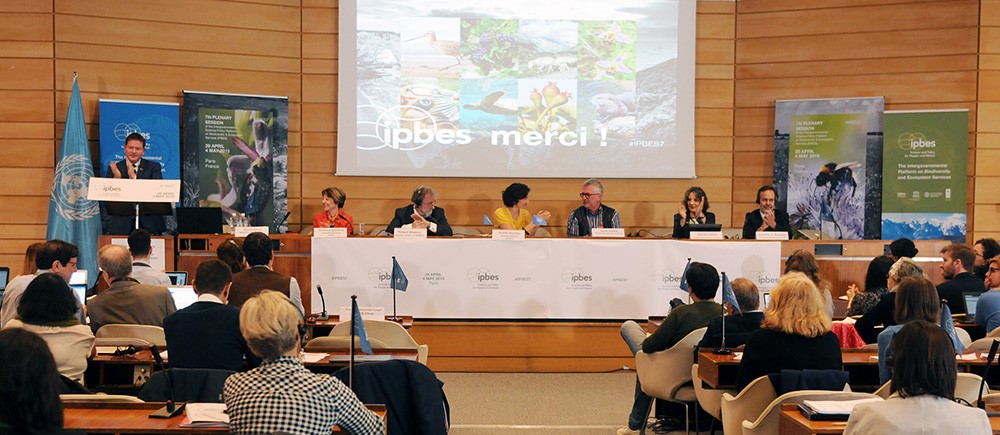
7th Session of the Intergovernmental Platform for Biodiversity and Ecosystem Services (IPBES-7)


Launch of the Global Assessment Report in Paris 
(Photo courtesy: http://enb.iisd.org/ipbes/7-plenary/)

The Intergovernmental Science-Policy Platform for Biodiversity and Ecosystem Services (IPBES) ended its one-week 7th Plenary meeting in Paris on Saturday 4th May, 2019. The major outcome of this session was the launch of the Global Assessment Report on Biodiversity and Ecosystem Services. This report was prepared by about 150 scientists from 50 countries, who took about three years to research existing scientific studies and reports. The Assessment Report painted a relatively disappointing picture of human’s stewardship of nature…which appears inconsistent with many of the National Reports on Biodiversity submitted by Governments periodically, to the Convention on Biological Diversity.

Two interesting summaries done by the BBC can be read here:


The IPBES official, advanced, unedited Summary for Policy Makers can be found here:

The Government of Trinidad and Tobago was represented at the 7th Plenary by Dr Rahanna Juman, Deputy Director of the Institute of Marine Affairs. Another outcome of that meeting was the election of two members to the IPBES Bureau from the Latin America and Caribbean group of countries (GRULAC). The two members are Mrs. Anna Maria Hernandez of Colombia who was also voted in as the new Chair of IPBES, and Dr Floyd Homer of Trinidad and Tobago. Dr Juman was also elected to serve as the alternate to Dr Homer.


Dr Juman (extreme left) and fellow representatives from the Group of Latin America and the Caribbean (GRULAC)
(Photo courtesy: Dr R Juman)


Wednesday, 20 March 2019

2018 UN Biodiversity Conference: Investing in Biodiversity for People and Planet


The United Nations’ 14th Meeting of the Conference of the Parties (COP) to the Convention on Biological Diversity (CBD) was held from 13-29 November, 2018, in Sharm El-Sheikh, Egypt, under the theme “Investing in biodiversity for people and planet”.

The Government of Republic of Trinidad and Tobago was represented at the CBD COP-14 by, Ms. Candace Amoroso, Biodiversity Specialist of the Multilateral Environmental Agreements Unit, Environmental Policy and Planning Division of the Ministry of Planning and Development. Ms. Amoroso formed part of the largest Caribbean contingent at any CBD COP this year, with eleven (11) countries being represented.

The conference concluded with broad international agreement on reversing the global destruction of nature and biodiversity loss, threatening all forms of life on Earth. To combat this crisis, Governments agreed to accelerate action to achieve the Aichi Biodiversity Targets, agreed in 2010, from now until 2020. Work to achieve these targets will take place at the global, regional, national and sub-national levels. The meeting also agreed on a comprehensive and participatory process for developing the post-2020 global biodiversity framework anticipated to be agreed upon at the next Conference of Parties (COP 15) in Beijing in 2020. The framework aims to safeguard nature and biodiversity for decades to come.

Ms. Candace Amoroso - Biodiversity Specialist

Mr. David Cooper, CBD Deputy Executive Secretary (first row, fourth from right) 
with delegates from the Caribbean


Monday, 23 October 2017

Trinidad and Tobago to Explore Benefits of Advancing the Nagoya Protocol

Please see this article to learn about the Nagoya Protocol and how Trinidad and Tobago plans on exploring its benefits. The Environmental Policy and Planning Division is the national focal point for the Convention on Biological Diversity which covers genetic resources that are applicable to the Nagoya Protocol.

Wednesday, 2 September 2015

Check out the Species of the Month for September!


 Get acquainted with some of Trinidad and Tobago's biodiversity! Check out the National Biodiversity Clearing House Mechanism (CHM) website for the series  "Species of the Month" which features one of our local species every month. This month we feature the Picoplat.

Visit www.biodiversity.gov.tt to view the "Species of the Month" series as well as access further relevant information on the conservation of biodiversity and on the implementation of the Convention on Biological Diversity (CBD) in Trinidad and Tobago.


Tuesday, 30 June 2015

Check out the Species of the month!


Get acquainted with some of Trinidad and Tobago's biodiversity! Check out the National Biodiversity Clearing House Mechanism (CHM) website for the series  "Species of the Month" which features one of our local species every month.

Visit www.biodiversity.gov.tt to view the "Species of the Month" series as well as access further relevant information on the conservation of biodiversity and on the implementation of the Convention on Biological Diversity (CBD) in Trinidad and Tobago.


Friday, 19 December 2014

Approval of the Capacity Development for improved management of Multilateral Environmental Agreements for Global Environmental Benefits Project

The Government of Trinidad and Tobago through the Ministry of the Environment and Water Resources has received approval from the Global Environment Facility (GEF) for its project entitled, “Capacity Development for Improved Management of Multilateral Environmental Agreements for Global Benefits.”  This project will be done in collaboration with the United Nations Development Programme.

The objective of this project is to strengthen national capacities for implementation of the Rio conventions (i.e. the Convention on Biological Diversity, United Nations Convention to Combat Desertification and the United Nations Framework Convention on Climate Change) and other Multilateral Environmental Agreements (MEAs) in Trinidad and Tobago.

The project’s strategy is to achieve this through:
  • training on environmental obligations, rules and regulations, monitoring and evaluation (M&E), and  national reporting guidelines and requirements to the Conventions for key actors including civil society and key members of national institutions as well as coordinating bodies with responsibilities for  environmental matters 
  • create, leverage and maintain coordination and alignment among relevant bodies by creating cross institutional alliances, strengthening management capacities for implementing Convention requirements and developing coordination mechanisms to replicate and disseminate necessary information and approaches 
  • develop an awareness and communications strategy to raise awareness of MEA obligations and  requirements and disseminate project results awareness to effectively coordinate the achievement of global obligations

Friday, 19 September 2014

Data Collection and Monitoring of National Biodiversity Targets and Indicators Workshop


On September 17th, 2014, the Multilateral Environmental Agreement Unit (MEAU) of the Ministry of the Environment and Water Resources (MEWR) held a Workshop with key stakeholders charged with assisting in the management of the country’s biological resources, and discharging the Government’s obligations under the Convention of Biological Diversity (CBD).

Ms. Candace Amoroso chairing the Data Collection and Monitoring of  National Biodiversity
Targets  and Indicators Workshop in September, 2014.

The key stakeholders included representatives from the Central Statistical Office (CSO) of the Ministry of Planning and Sustainable Development, Fisheries, Agricultural Planning and Research Divisions and Aquaculture Unit of the Ministry of Food  Production, the Environmental Management Authority, Forestry Division of the Ministry of the Environment and Water Resources as well as the Department of the Natural Resources and the Environment, Tobago House of Assembly.
 
Through a consultative process with key stakeholders held during the period April–June, 2014 draft National Biodiversity Targets and Indicators were developed. The Targets and Indicators will allow Trinidad and Tobago to more efficiently monitor the status of and guide management and conservation interventions of the country’s biological resources and as such would greatly  contribute to the country in achieving the objectives of the CBD.

As a follow-up, the Workshop in September was undertaken to discuss and determine responsibilities for data collection and monitoring of the proposed draft National Biodiversity, which were previously refined via consultations with stakeholders in April– June, 2014.

The stakeholders were also informed that the finalised list of National Biodiversity Targets and Indicators along with the proposed list of data collectors were to be submitted to the   Cabinet of the Republic of Trinidad and Tobago as the National Biodiversity Targets and Indicators of the country.

Participants discussing and determining their roles in  data collection and monitoring of
 the proposed National Biodiversity targets and indicators.

Tuesday, 26 August 2014

Improving Forest and Protected Area Management in Trinidad and Tobago Project - Approved!

The Ministry of the Environment and Water Resources as the National Focal Point for the Convention on Biological Diversity and the Convention to Combat Desertification was assisted by the Food and Agriculture Organization (FAO) to develop a proposal for a large scale Global Environmental Facility (GEF) funded project entitled “Improving Forest and Protected Area Management in Trinidad and Tobago.”

The four (4) year project is intended to conserve biodiversity in the country by setting up a protected areas system and enhancing capacity and finance for conservation management. It will also assist in the implementation of the new National Forest Policy and the National Protected Areas Policy.

In April, 2014, the final project document produced was endorsed by the GEF CEO which has recently been approved by Cabinet.  The approved project document and endorsement letter can be found below:

Friday, 27 June 2014

National Biodiversity Targets and Indicators Setting Workshops


Through a consultative process with key stakeholders, draft National Biodiversity Targets and Indicators were developed in alignment with the Convention on Biological Diversity (CBD) Strategic Plan and its twenty (20) Aichi Biodiversity Targets

Snapshots of the Biodiversity Targets and Indicators Workshops

The Targets and Indicators will allow Trinidad and Tobago to more efficiently monitor the status of and guide management and conservation interventions of the country’s biological resources  and as such would greatly contribute to the country, as a signatory to the Convention, in achieving the objectives of the CBD.


The Multilateral Environmental Agreement Unit (MEAU) of the Ministry of the Environment and Water Resources (MEWR) conducted three (3) Workshops to refine draft National Biodiversity Targets and Indicators. These Workshops were conducted on:


  • April 30th, 2014;  MEWR Head Office, Port-of-Spain - with an initial set of key stakeholders with the aim of refining the draft National Biodiversity Targets and Indicators at the 
  • May 27th, 2014; Works Conference Room, Old Government Farm Road, Tobago – with key Tobago stakeholders, to further refine the draft National Biodiversity Targets and Indicators; and on
  • June 24th, 2014; Trinidad and Tobago Bureau of Standards, Macoya – with a wider pool of Biodiversity Focal Point Network members, to come to a consensus on the draft National Biodiversity Targets and Indicators.


This exercise was necessary to receive the input of the differing stakeholder groups on the draft National Targets as many of the Biodiversity related Agencies and Institutions would be relied on for provision of the necessary information. This would then facilitate our country’s ability to report to the CBD’s Secretariat on our achievement of the Aichi Targets. The final document that arose from these Workshops will be presented to the Cabinet as the National Biodiversity Targets and Indicators for Trinidad and Tobago.


Wednesday, 7 May 2014

National Biodiversity Targets and Indicators Workshop


On April 30th, 2014, the Multilateral Environmental Agreement Unit (MEAU) of the Ministry of the Environment and Water Resources (MEWR) held a Workshop with an initial set of key stakeholders with the aim of refining draft National Biodiversity Targets and Indicators.

This Workshop emanated from the decisions of the Tenth Meeting of the Conference of Parties (COP-10) to the Convention on Biological Diversity (CBD), where the updated Strategic Plan for Biodiversity for the 2011-2020 period was adopted. This Strategic Plan which included 20 targets termed Aichi Biodiversity Targets are to be revised and adapted into national biodiversity strategies and action plans.

View of participants and Ms. Amoroso (MEAU) giving a presentation on the CBD and the Strategic Plan 2010-2020 and its Aichi Biodiversity Targets
The Draft National Biodiversity Targets and Indicators were initially developed within the MEAU. Their achievement would greatly contribute to the country in accomplishing the three (3) objectives of the Convention:
  1. the conservation of biological diversity,
  2.  the sustainable use of its components, and
  3. the fair and equitable sharing of the benefits arising out of the utilization of genetic resources.
In attendance were representatives from the Ministry of Food Production, the Institute of Marine Affairs (IMA), the Environmental Management Authority (EMA), the University of the West Indies (UWI), Forestry Division, the Central Statistical Office (CSO) and the Tobago House of Assembly (THA).

Dr. Homer (MEAU) giving a presentation on biodiversity indicators.
An additional Workshop is in the process of being planned for June 2014. The draft National Biodiversity Targets and Indicators coming out of the initial Workshop held on April 30th, 2014 will be further discussed and refined by the MEA Focal Point Network before they are submitted to Cabinet for approval as the National Biodiversity Targets and Indicators of the country. 

Presentations from the National Biodiversity Targets Workshop: 

Capacity Building Workshop on Ecosystem Conservation and Restoration


The Capacity Building Workshop for the Caribbean on Ecosystem Conservation and Restoration to support achievement of the Aichi Biodiversity Targets was held in Belize City, Belize from April 28th – May 2nd, 2014.

The Workshop was convened as part of a series by the United Nations Convention on Biological Diversity (CBD), in collaboration with the Food and  Agriculture Organisation (FAO). It sought to provide support to parties in the development of national targets and plans for ecosystem conservation and restoration within the framework of the Strategic Plan for Biodiversity specifically its Aichi  Biodiversity Targets 5, 11 and 15. Targets 5, 11 and 15 set quantitative global targets to reduce the loss of natural habitats, improve protected area networks and restore degraded areas.

In attendance at the Workshop were representatives from Caribbean Parties to the CBD, the  CBD  Secretariat as well as   international and regional organisations. Trinidad and Tobago was represented by Ms. Anastasia Gordon, Environmental Policy Analyst, Environmental Policy and  Planning Division and Mr. Denny Dipchansingh, Acting Director of Northern Range Reforestation Project (NRRP),  Forestry Division; both from the Ministry of the Environment and Water Resources.
L-R: Mr. Dipchansingh and Ms. Gordon engaged in one of the small group activities of  the Capacity Building Workshop in Belize ( April 28 - May 2, 2014).

 Over the duration of the five (5) day, participants gained knowledge of support available for the development of  national targets and plans for ecosystem conservation and restoration and for the integration of these targets 5, 11 and 15 into updated National Biodiversity Strategy and Action Plans (NBSAPs) and mainstreaming them into broader national policies, plans and programmes. Additionally, Caribbean countries also developed capacity to use appropriate assessments, policy and planning tools to achieve ecosystem conservation and restoration at appropriate levels.